






Email marketing continues to outperform most digital channels in conversions, retention, and revenue generation. Even with social media, paid ads, and AI-driven marketing tools dominating the landscape, email remains one of the most reliable and profitable ways to build relationships and drive sales.
If you’re new to this channel, the good news is that email marketing for beginners is easier to start than most people think. You don’t need a massive budget or advanced technical skills to see results. What you do need is a clear strategy, the right mindset, and a set of proven tactics.
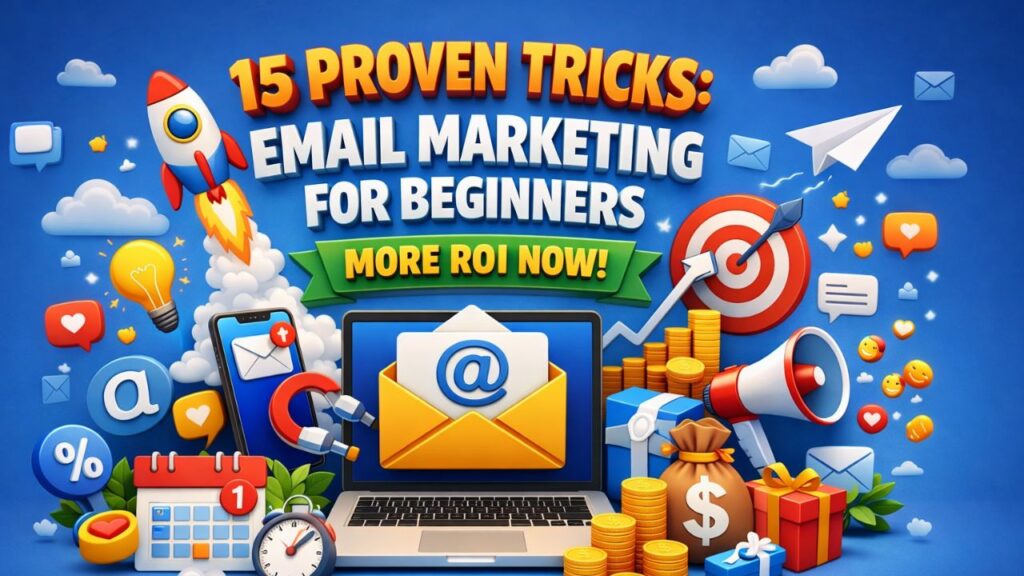
In this guide, you’ll learn how email marketing works, why it delivers incredible returns, and the 15 proven tricks you can use to get more ROI right now.
Table of Contents
What Is Email Marketing and How Email Marketing Works?
Email marketing is a digital strategy that involves sending targeted messages to a group of subscribers who have given permission to receive your emails. These messages can include newsletters, promotions, updates, educational content, and automated sequences.
How Email Marketing Works Step-by-Step?
Understanding how email marketing works makes the process far less intimidating.
Step 1: Build an Email List
You collect email addresses through signup forms, landing pages, and lead magnets.
Step 2: Segment Your Audience
Subscribers are grouped based on interests, behavior, or demographics.
Step 3: Create Email Campaigns
You send valuable content or promotional messages.
Step 4: Automate Sending
Automation tools deliver emails at the perfect time.
Step 5: Track Performance
Metrics help you optimize and improve future campaigns.
This simple workflow makes email marketing for beginners one of the most accessible marketing channels.
Benefits of Email Marketing for Beginners
Understanding the benefits of email marketing will help you stay motivated and consistent.
1. Low Cost, High Impact
Email marketing is far cheaper than paid advertising and delivers long-term value.
2. Direct Audience Ownership
You don’t depend on social media algorithms.
3. High Personalization
Emails can be tailored based on behavior and interests.
4. Measurable Results
Every click, open, and conversion is trackable.
5. Long-Term Relationship Building
Email builds trust and loyalty over time.
For anyone exploring email marketing for beginners, these benefits make it a must-learn skill.
Why Email Delivers the Highest Email Marketing ROI?
Email consistently delivers one of the best returns among digital marketing channels. The reason is simple: email gives you direct access to people who already trust your brand.
Key reasons behind strong email marketing ROI:
- No advertising cost per send
- Automated campaigns run 24/7
- Highly targeted messaging
- Repeat customer opportunities
- Scalable growth potential
When used correctly, email becomes a long-term revenue engine.
15 Proven Tricks: Email Marketing for Beginners
Let’s move into the practical section. These proven strategies will help you build momentum fast.
1. Build a Quality Email List (Not Just a Big One)
The foundation of email marketing strategies starts with your list.
Focus on:
- Lead magnets
- Signup forms
- Popups and landing pages
- Content upgrades
Quality subscribers always outperform quantity in email marketing for beginners.
2. Understand Your Audience First
You can’t write emails that convert without knowing your audience.
Research:
- Pain points
- Interests
- Goals
- Buying behavior
Audience understanding drives better engagement.
3. Create an Email Marketing Funnel
An email marketing funnel guides subscribers from awareness to purchase.
Stages include:
- Welcome emails
- Educational emails
- Promotional emails
- Retention emails
Funnels turn subscribers into loyal customers. If you plan to use email for affiliate monetization, this affiliate marketing for beginners roadmap explains how content, audience trust, and permission-based promotion work together.
4. Segment Your Subscribers
Segmentation is one of the most powerful email marketing strategies.
Segment based on:
- Location
- Interests
- Purchase behavior
- Engagement level
This increases relevance and conversions.
5. Write Subject Lines That Get Clicks
Your subject line determines whether your email gets opened.
Best practices:
- Keep it short
- Create curiosity
- Use numbers or questions
- Add personalization
6. Personalization Is the Real Growth Hack
People respond to emails that feel personal.
Personalize:
- Names
- Recommendations
- Content
- Timing
Personalization boosts engagement dramatically.
7. Optimize for Mobile First
Most emails are opened on mobile devices.
Ensure:
- Short paragraphs
- Large buttons
- Simple layouts
- Fast loading images
Mobile optimization is essential in email marketing best practices. To extend these improvements beyond email design, explore mobile marketing tips for better engagement across messaging, content, timing, and calls to action.
8. Use Automation From Day One
Automation saves time and increases revenue.
Start with:
- Welcome sequences
- Abandoned cart emails
- Re-engagement emails
Automation makes email marketing for beginners scalable.
9. Follow Email Marketing Best Practices
Core email marketing best practices include:
- Send consistently
- Provide value first
- Avoid spam triggers
- Include clear CTAs
Consistency builds trust.
10. Use Proven Email Marketing Campaign Ideas
Strong email marketing campaign ideas include:
- Welcome emails
- Product launches
- Educational newsletters
- Special offers
- Surveys and feedback emails
Campaign variety keeps subscribers engaged.
11. Write Emails Like a Human
Write conversationally. Use pronouns. Speak directly to the reader.
People connect with authenticity, not corporate language.
12. Test Everything
A/B testing improves performance over time.
Test:
- Subject lines
- CTA buttons
- Email length
- Send time
Small changes create big improvements.
13. Track Metrics That Matter
Focus on:
- Open rate
- Click-through rate
- Conversion rate
- Unsubscribe rate
Tracking improves long-term email marketing ROI.
14. Learn From Real Email Marketing Examples
Effective email marketing examples share common traits:
- Clear purpose
- Strong CTA
- Simple design
- Valuable content
Studying successful emails accelerates growth.
15. Use an Email Marketing Checklist Before Sending
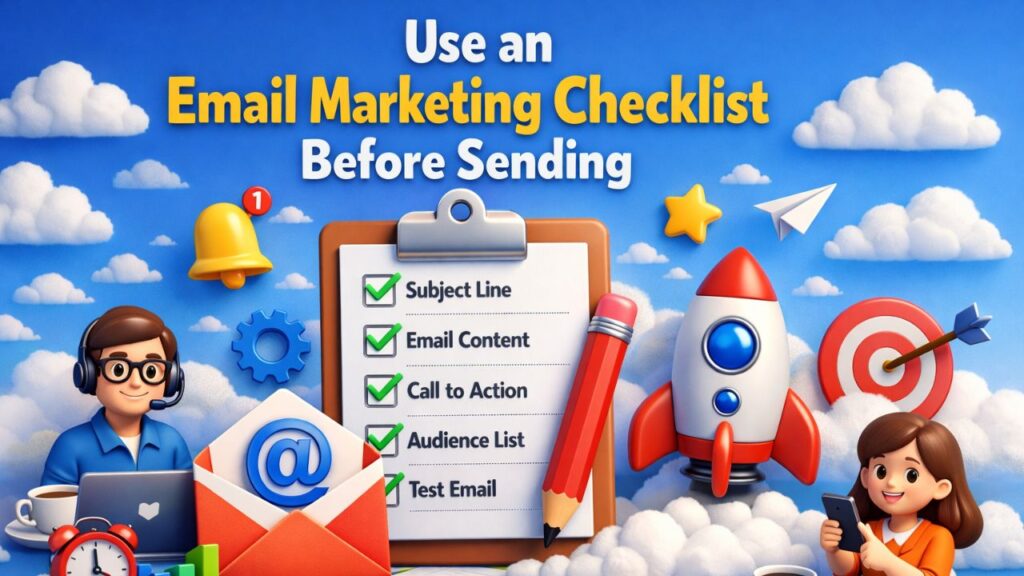
A simple email marketing checklist prevents costly mistakes:
- Check links
- Preview mobile version
- Test subject line
- Confirm personalization
- Verify CTA placement
Checklists reduce errors and improve quality.
Essential Email Marketing Tips Beginners Should Never Ignore
Key email marketing tips:
- Send value before promotions
- Keep emails simple
- Be consistent
- Focus on relationships
- Track and improve continuously
Common Email Marketing Mistakes Beginners Make
Avoid:
- Buying email lists
- Sending too frequently
- Ignoring analytics
- Poor segmentation
Weak CTAs
Avoiding mistakes speeds up success in email marketing for beginners.
A Simple 30-Day Starter Plan
Week 1: Build list and lead magnet
Week 2: Create welcome series
Week 3: Send first newsletter
Week 4: Analyze and optimize
This simple roadmap helps beginners start confidently.
Final Thoughts
Starting email marketing for beginners doesn’t require perfection. It requires action, consistency, and a willingness to learn.
Email remains one of the most powerful digital marketing channels available. When you apply the strategies in this guide, you’ll build stronger relationships, increase engagement, and generate more revenue.
Start small, stay consistent, and watch your email marketing grow into a powerful business asset.
Frequently Asked Questions
Is email marketing good for beginners?
Yes. It’s affordable, easy to start, and delivers strong ROI.
How often should beginners send emails?
Start with one email per week and adjust based on engagement.
What is a good email open rate?
Typically between 20–30%, depending on your industry.
How long should marketing emails be?
Short and focused emails perform best.
Can email marketing work without a website?
Yes, but a website or landing page improves conversions.