












Search engines are evolving faster than ever. With AI-driven results, helpful content updates, and changing user behavior, simply publishing articles is no longer enough. If your content isn’t optimized properly, it can remain invisible no matter how valuable it is.
That’s why learning how to optimize website content for SEO has become essential for bloggers, marketers, and small businesses in 2026. The good news is that content optimization doesn’t have to feel complicated. With the right strategy, you can build authority, improve visibility, and attract consistent organic traffic.
This guide walks you through practical steps that help your content perform better, reach the right audience, and grow sustainably.
Table of Contents
What Is Search Engine Optimization and How It Works?
Before jumping into strategies, it helps to understand what is search engine optimization and how it works.
Search engine optimization (SEO) is the process of improving a website so that search engines can easily understand, index, and rank its pages. Search engines use automated bots to crawl websites, evaluate relevance and quality, and display the best results for users.
In simple terms, SEO works through three main stages:
Crawling – Search engines discover your pages.
Indexing – They store and analyze your content.
Ranking – They decide where your content should appear.
Modern SEO also considers user experience signals such as page speed, mobile usability, engagement, and trust. When your content satisfies search intent and provides real value, it gains better visibility.
What Are the Best SEO Techniques for 2026?
SEO trends continue to evolve. Understanding what are the best SEO techniques for 2026? Helps future-proof your content strategy.
Key trends include:
- AI-assisted search and semantic optimization
- Strong EEAT signals (Experience, Expertise, Authority, Trust)
- Search intent–focused content
- Mobile-first indexing and Core Web Vitals
- Voice and conversational search
- Helpful, people-first content updates
The shift is clear: search engines now prioritize content that genuinely helps readers.
12 Quick Growth Steps: How to Optimize Website Content for SEO
Let’s break down the actionable steps you can start implementing today.
1. Start With Smart Keyword Research
How to choose SEO keywords for blog posts?
Effective optimization always begins with keyword research. Learning how to choose SEO keywords for blog posts helps you understand what your audience is searching for.
Focus on:
- Long-tail keywords with clear intent
- Balanced search volume and difficulty
- Question-based queries
- Topic clusters instead of single keywords
Strong keyword research is the first step in understanding how to optimize website content for SEO effectiveness.
2. Match Content With Search Intent
Every search has a purpose. When your content aligns with intent, rankings improve naturally.
Types of intent:
- Informational
- Navigational
- Commercial
- Transactional
Matching intent is a core principle of how to optimize website content for SEO successfully.
3. Write Helpful, People-First Content
Search engines reward content that genuinely helps readers. Focus on clarity, depth, and usefulness.
Prioritize:
- Easy readability
- Logical structure
- Updated information
- Natural keyword usage
This approach strengthens your understanding of how to optimize website content for SEO in a sustainable way.
4. Optimize Title Tags and Meta Descriptions
Your title and description influence clicks from search results.
Best practices:
- Include primary keyword naturally
- Use numbers and power words
- Keep titles under 60 characters
Optimized metadata supports how to optimize website content for SEO by improving click-through rates.
5. Use Proper Heading Structure
Headings guide both readers and search engines.
Use:
- One H1 per page
- Clear H2 and H3 sections
- Keyword-rich subheadings
Good structure is another important part of how to optimize website content for SEO.
6. Build a Strong Internal Linking Strategy
Internal links help search engines discover pages and understand topic relationships.
Benefits:
- Improved crawlability
- Better user navigation
- Stronger topical authority
7. Optimize Images and Media
Visual content plays a growing role in SEO.
Optimize by:
- Using descriptive alt text
- Compressing images
- Choosing relevant file names
Image optimization reinforces how to optimize website content for SEO while improving user experience.
8. SEO Best Practices for Mobile Friendly Sites
Mobile optimization is no longer optional. Following SEO best practices for mobile friendly sites ensures better rankings and engagement.
Focus on:
- Responsive design
- Fast loading speed
- Readable fonts and spacing
- Easy navigation
Mobile optimization is central to how to optimize website content for SEO in modern search.
9. Improve Page Speed and Core Web Vitals
Page speed affects rankings and user experience.
Key metrics:
- Largest Contentful Paint
- Interaction to Next Paint
- Cumulative Layout Shift
Fast websites encourage users to stay longer and interact more.
10. Difference Between On Page and Off Page SEO
Understanding the difference between on page and off page SEO helps build a balanced strategy.
On-page SEO
- Content optimization
- Keywords and headings
- Internal linking
- Technical improvements
Off-page SEO
- Backlinks
- Brand mentions
- Social signals
Both work together to support how to optimize website content for SEO.
11. What Are Common SEO Mistakes to Avoid
Knowing what are common SEO mistakes to avoid prevents ranking issues.
Avoid:
- Keyword stuffing
- Duplicate content
- Ignoring mobile users
- Publishing thin content
- Neglecting user experience
12. Track Results and Improve Continuously
How long does SEO take to show results
Many wonder how long does SEO take to show results. Typically, noticeable improvements appear within 3–6 months, while strong growth can take 6–12 months.
Track:
- Search rankings
- Organic traffic
- Click-through rates
- Engagement metrics
Continuous improvement is the final step in how to optimize website content for SEO.
Search Engine Optimization Tips for Bloggers
These search engine optimization tips for bloggers can accelerate growth:
- Publish consistently
- Build topic clusters
- Update old posts regularly
- Optimize for featured snippets
- Focus on readability and engagement
SEO Checklist for Small Business Websites
This SEO checklist for small business websites helps ensure everything is covered:
- Keyword research completed
- Mobile-friendly design
- Fast loading pages
- Optimized titles and descriptions
- Internal linking implemented
- Technical SEO basics fixed
- Backlink strategy in place
Step by Step SEO Guide for Beginners 2026
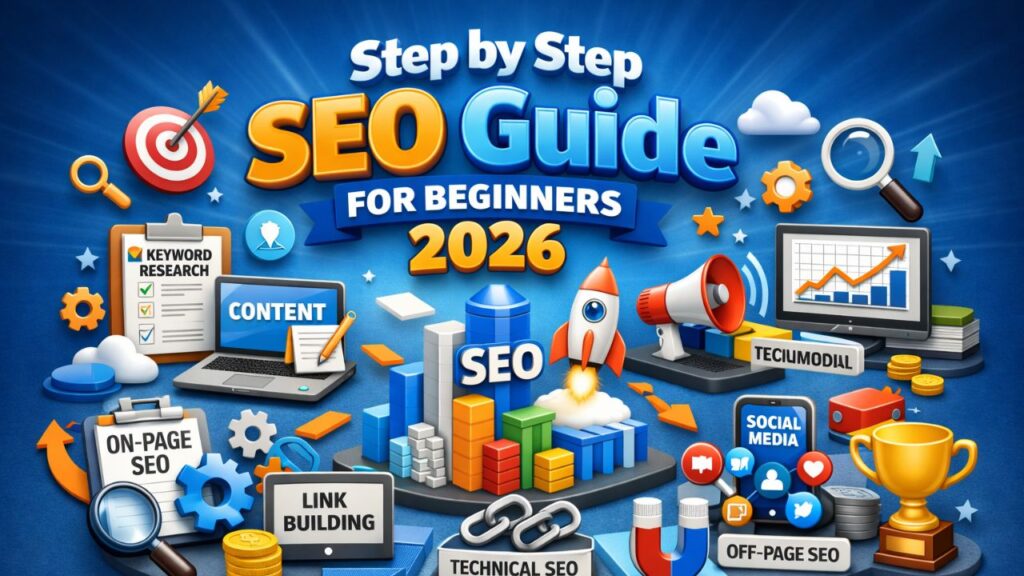
This step by step SEO guide for beginners 2026 simplifies the process:
- Research keywords
- Plan content topics
- Optimize on-page elements
- Publish and index pages
- Build backlinks gradually
- Monitor and update content
Conclusion
Mastering how to optimize website content for SEO is one of the most valuable investments you can make in your online presence. When your content aligns with user intent, follows best practices, and provides real value, search engines reward it with visibility.
SEO is not a one-time task. It’s an ongoing process of learning, improving, and adapting. Start applying these strategies today, and your content will steadily move toward stronger rankings and long-term organic growth.
FAQs
What is search engine optimization and how it works?
SEO helps search engines understand and rank your content based on relevance, quality, and user experience.
How long does SEO take to show results?
Most websites see improvements within 3–6 months, with stronger results over time.
What are the best SEO techniques for 2026?
AI-driven search optimization, helpful content, mobile-first design, and strong EEAT signals.
What are common SEO mistakes to avoid?
Keyword stuffing, duplicate content, ignoring mobile users, and publishing thin content.
How to choose SEO keywords for blog posts?
Focus on search intent, long-tail keywords, and realistic competition levels.
