







Digital competition is intense, and organic growth often takes time. That’s why many businesses turn to pay per click marketing to accelerate visibility, generate qualified leads, and drive revenue faster. When executed strategically, PPC can become one of the most predictable and scalable traffic channels available.
This in-depth guide explains how PPC works, why it delivers rapid results, and the 10 smartest strategies you can use to grow faster while keeping costs under control.
Table of Contents
Understanding the Basics of PPC Advertising
Before diving into strategies, it’s important to understand what pay per click advertising actually means.
PPC is a digital advertising model where advertisers pay only when someone clicks their ad. Instead of waiting months for organic rankings, businesses can immediately appear at the top of search results through paid search advertising.
At the core of most campaigns is Google Ads, which allows advertisers to bid on keywords and display ads to users actively searching for solutions.
How Pay Per Click Advertising Works
The process is simple but powerful:
- Advertisers choose keywords related to their products or services
- Ads are created and entered into an auction
- Search engines rank ads based on bid and quality score
- Advertisers pay only when users click the ad
This system makes PPC one of the most measurable forms of marketing available today.
Why Businesses Choose PPC for Rapid Growth
Companies choose PPC because it delivers immediate exposure and measurable performance.
Here’s why it works so well:
- Instant traffic and visibility
- Highly targeted audience reach
- Full control over budgets and spending
- Easy performance tracking and optimization
For startups and entrepreneurs, pay per click advertising for small business provides a fast and flexible way to compete against larger brands.
PPC also complements other marketing channels. It works alongside strategies like content marketing, email campaigns, and even Link Building in SEO to build a balanced digital presence.
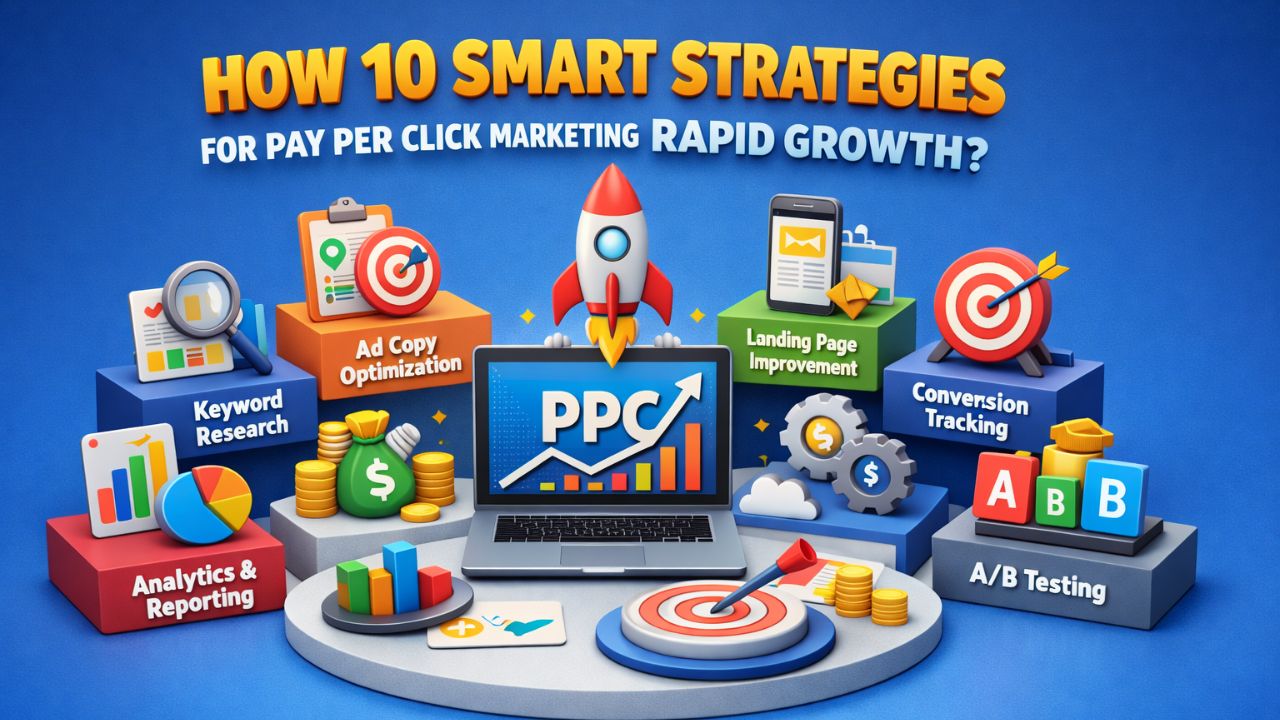
10 Smart Strategies for Rapid PPC Growth
Now let’s explore the strategies that can transform your campaigns from average to exceptional.
1. Set Clear Campaign Goals and KPIs
Every successful campaign begins with clear objectives. Without defined goals, even the best ads can fail to deliver meaningful results.
Key performance indicators should include:
- Cost per click (CPC)
- Conversion rate
- Return on ad spend (ROAS)
- Cost per acquisition (CPA)
Clear goals ensure your pay per click marketing efforts remain focused and measurable from day one.
2. Build a High-Intent Keyword Targeting Strategy
Keywords are the backbone of PPC success. A strong ppc keyword targeting strategy helps you reach users who are ready to take action.
Focus on:
- Long-tail keywords with buying intent
- Low competition, high relevance search terms
- Search intent alignment
This approach improves click-through rates and makes pay per click marketing far more efficient.
3. Structure Campaigns for Maximum Control
Campaign structure directly impacts performance. Organizing campaigns properly helps improve targeting, reporting, and optimization.
A typical structure includes:
- Campaign level → budget and targeting
- Ad group level → theme or product category
- Keyword level → specific search queries
Well-organized accounts make ppc campaign management more effective and scalable.
4. Write High-Converting Ad Copy
Your ad copy determines whether users click or scroll past. Strong messaging can dramatically improve results.
Key elements of effective ads:
- Clear value proposition
- Emotional triggers and urgency
- Strong call-to-action
- Keyword relevance
Modern marketers often combine PPC messaging with Content Creation in the Age of AI to produce engaging and relevant ads faster.
5. Optimize Landing Pages for Conversions
Clicks alone don’t generate revenue. Conversions happen on landing pages.
Your landing pages should include:
- Fast loading speed
- Mobile optimization
- Clear headlines and benefits
- Simple forms and strong CTAs
When you Optimize Website Content for SEO and conversion together, your campaigns become significantly more profitable.
6. Use Smart Bidding Strategies
Bidding determines how often your ads appear and how much you pay.
Common bidding strategies include:
- Manual CPC
- Target CPA
- Target ROAS
- Maximize conversions
Effective bidding plays a major role in google ppc advertising performance and helps scale successful campaigns quickly.
7. Leverage Audience Targeting and Retargeting
Most visitors don’t convert on the first visit. Retargeting helps bring them back.
You can target users based on:
- Website visits
- Previous purchases
- Search behavior
- Customer lists
Combining PPC with Email Marketing creates powerful remarketing funnels that increase conversions.
8. Continuously Reduce PPC Costs
Controlling spending is critical for long-term success. Learning how to reduce ppc cost ensures campaigns remain profitable.
Cost reduction techniques include:
- Adding negative keywords
- Improving quality score
- Refining audience targeting
- Optimizing ad relevance
Lower costs make pay per click marketing more sustainable and scalable.
9. A/B Test Everything
Testing is the engine of improvement. Even small changes can produce significant performance gains.
Test variations of:
- Headlines and descriptions
- Landing pages
- Keywords and match types
- Bidding strategies
Data-driven testing ensures your paid search advertising keeps improving over time.
10. Measure, Analyze, and Scale Campaigns
The final step is scaling what works.
Track performance regularly and focus on:
- High-converting keywords
- Profitable audience segments
- Top-performing ads
This is where professional ppc advertising services often provide significant value by helping businesses expand profitable campaigns faster.
When combined with Content Marketing and efforts to Optimize Your Old Content for Search, PPC creates a powerful long-term marketing ecosystem.
Tools and Platforms for PPC Success
Successful campaigns rely on the right tools.
Essential PPC tools include:
- Keyword research platforms
- Analytics dashboards
- Conversion tracking tools
- Automation software
Many marketers integrate PPC campaigns with CMS Systems to streamline landing page creation and testing.
Common PPC Mistakes to Avoid
Avoiding common mistakes can save time and budget.
Frequent issues include:
- Poor keyword targeting
- Weak ad copy
- Ignoring landing page optimization
- Not tracking conversions
- Lack of ongoing testing
Avoiding these mistakes ensures your pay per click marketing campaigns deliver consistent results.
The Future of PPC Marketing
PPC continues to evolve rapidly.
Key trends shaping the future include:
- AI-driven automation
- Smart bidding advancements
- Privacy and cookie changes
- Voice and visual search ads
Businesses that adapt quickly will continue benefiting from pay per click marketing as a major growth driver.
Final Thoughts
PPC offers one of the fastest ways to generate traffic, leads, and sales online. By implementing these 10 smart strategies, you can create campaigns that scale efficiently and deliver measurable results.
When done correctly, pay per click marketing becomes more than just advertising—it becomes a reliable engine for sustainable growth.
FAQs: Pay Per Click Marketing
1. What is pay per click marketing?
Pay per click marketing is a digital advertising model where advertisers pay only when someone clicks their ad. It helps businesses appear at the top of search results instantly and generate targeted traffic quickly.
2. How does pay per click advertising work?
If you’re wondering how pay per click advertising works, the process involves selecting keywords, creating ads, bidding in an auction, and paying only when a user clicks the ad. Search engines rank ads based on relevance, bid amount, and quality score.
3. Is pay per click advertising suitable for small businesses?
Yes, pay per click advertising for small business is highly effective because it allows small budgets to compete with larger brands. Businesses can control daily spending, target specific audiences, and scale campaigns gradually.
