






Learning web development can feel confusing at the beginning. There’s an endless supply of tutorials, tools, and advice—yet very little clarity on what to learn first and how everything fits together. If you’re just starting out, this guide is built specifically for you.
This article breaks down web development for beginners into a clear, logical, and practical path. Instead of overwhelming you with jargon, it focuses on what truly matters—skills, structure, and long-term growth. By the end, you’ll know exactly how to move forward with confidence.
Table of Contents
Why Web Development Is an Ideal Skill to Learn Today?
Websites are the foundation of the modern internet. Businesses, creators, educators, and service providers all rely on web platforms to reach their audiences. That’s why web development for beginners continues to attract students, career switchers, and freelancers worldwide.
What makes web development especially appealing is its accessibility. You don’t need a technical background to begin. With the right learning approach, anyone can build functional, responsive, and professional websites.
This guide follows a step by step web development guide approach so you can learn progressively—without confusion or wasted effort.
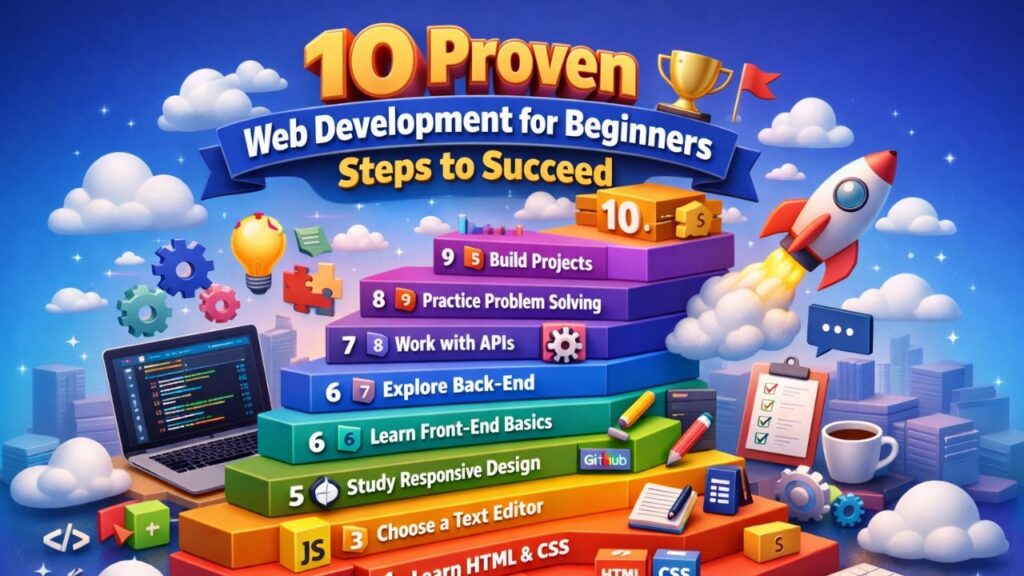
Step 1: Learn the Core Web Development Basics
Before diving into tools or frameworks, it’s important to understand what web development actually involves. A solid web development basics tutorial starts with clarity.
At a high level, web development includes:
- Frontend development (what users see)
- Backend development (how data and logic work behind the scenes)
- Full stack development, which combines both
Understanding these fundamentals helps web development for beginners avoid learning things randomly and instead build a strong base that supports long-term growth.
Step 2: Follow a Structured Web Development Roadmap
One of the biggest reasons beginners struggle is the lack of direction. A well-defined web development roadmap for beginners removes guesswork and keeps learning focused.
A beginner-friendly roadmap typically includes:
- HTML for structure
- CSS for layout and styling
- JavaScript for interactivity
- Basic version control concepts
- Introductory backend awareness
With a roadmap, web development for beginners becomes a guided journey instead of a trial-and-error process.
Step 3: Front End Web Development Explained Clearly
Frontend development is often the first practical step for beginners because results are visible and motivating. When front end web development explained properly, it becomes much easier to understand how websites function.
Frontend focuses on:
- Structuring content logically
- Designing visually appealing layouts
- Making pages interactive and user-friendly
This stage is crucial because it teaches how users actually experience a website—an essential skill for anyone serious about web development for beginners.
Step 4: Understand How to Build a Responsive Website
Modern users browse websites on phones, tablets, laptops, and large screens. Learning how to build a responsive website ensures your work looks good everywhere.
Responsive design helps:
- Improve usability across devices
- Increase engagement and retention
- Meet search engine expectations
By applying responsive principles and best practices for web development, beginners create websites that are both functional and future-proof.
Step 5: Learn Essential Web Development Tools
The right tools make learning smoother and more efficient. Choosing appropriate web development tools for beginners helps you focus on skills instead of technical frustration.
Beginner tools typically support:
- Writing and managing code efficiently
- Debugging issues quickly
- Tracking changes and improvements
These tools prepare web development for beginners for real-world workflows without adding unnecessary complexity.
Step 6: Practice Using Real Project Ideas
Skill development happens through practice. Working on web development project ideas for beginners bridges the gap between theory and application.
Beginner-level projects allow you to:
- Apply what you’ve learned
- Build confidence through real outcomes
- Create portfolio-ready work
Projects turn web development for beginners into a hands-on, results-driven experience.
Step 7: Learn Full Stack Web Development Basics
Once you’re comfortable with frontend concepts, learning full stack web development basics gives you a broader understanding of how websites function end to end.
At this stage, beginners explore:
- How servers handle requests
- How data is stored and retrieved
- How frontend and backend communicate
Even basic full stack knowledge strengthens your overall understanding of web development for beginners.
Step 8: Apply Best Practices for Professional Growth
Quality matters. Following best practices for web development helps beginners write clean, readable, and maintainable code.
Good practices include:
- Organized code structure
- Consistent naming conventions
- Performance and security awareness
These habits separate casual learners from serious developers and add long-term value to web development for beginners.
Step 9: Understand How to Start a Web Development Career
Learning to code is only part of the journey. Knowing how to start a web development career helps you apply your skills professionally.
Career preparation involves:
- Building a strong portfolio
- Understanding industry expectations
- Choosing between jobs, freelancing, or contract work
With the right strategy, web development for beginners can lead to sustainable and rewarding career opportunities.
Step 10: Build a Long-Term Learning Mindset
Web development evolves constantly. Tools change, frameworks update, and best practices improve. Long-term success comes from adaptability.
A strong mindset includes:
- Continuous learning
- Staying updated with industry trends
- Improving through feedback and experience
This approach ensures web development for beginners doesn’t stop at learning basics—it becomes a lifelong skill.
Frequently Asked Questions
Is web development for beginners hard to learn?
It’s challenging at first, but structured learning and regular practice make it manageable.
How long does it take to learn web development basics?
Most beginners can understand the fundamentals within a few months of consistent effort.
Do beginners need to learn full stack development immediately?
No. Starting with frontend and gradually moving into full stack works best.
Are projects important for beginners?
Yes. Projects help reinforce learning and demonstrate practical skills.
What is the best way to stay motivated while learning?
Clear goals, real projects, and steady progress keep motivation high.
Final Thoughts
Learning web development isn’t about rushing—it’s about building a strong foundation. By following this step by step web development guide, you now have a clear and realistic path forward.With consistent effort, curiosity, and practical application, web development for beginners becomes less intimidating and more empowering. Start where you are, build what you can, and keep improving—progress will follow.