






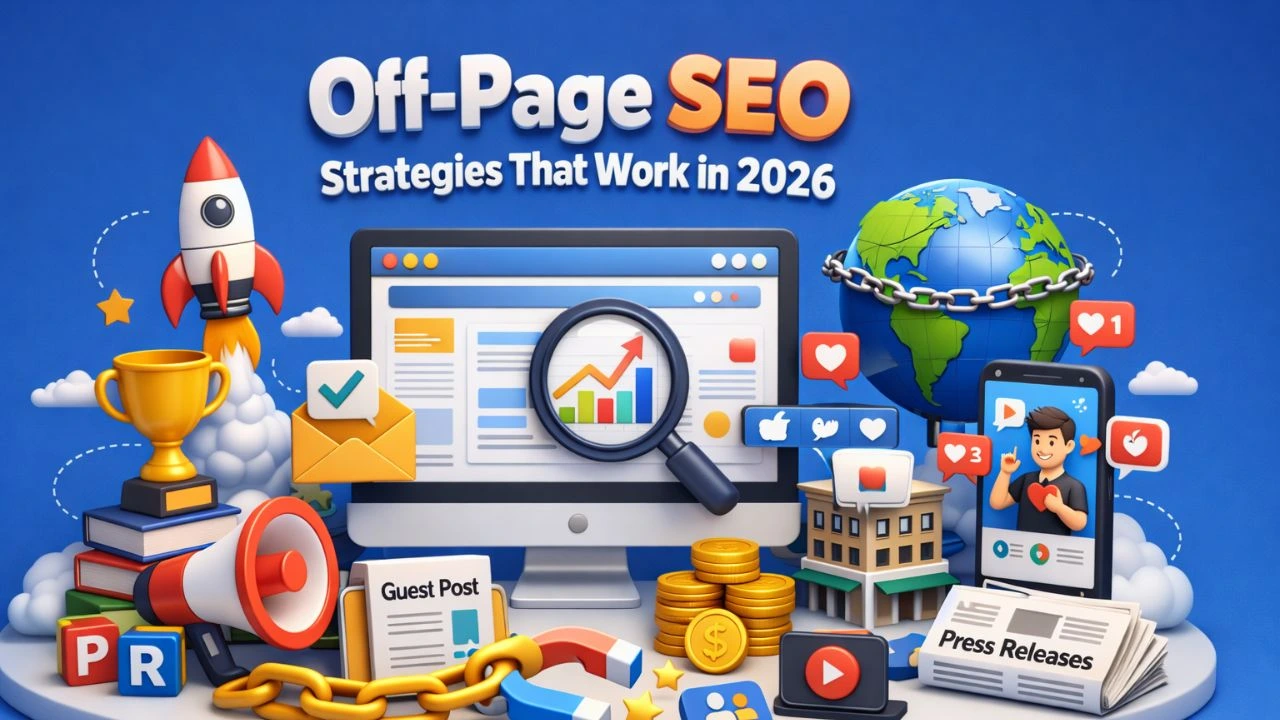
If you want stronger rankings in 2026, you cannot treat off page SEO as just “getting backlinks.” Today, off page SEO is about building authority people can trust, earning mentions that reinforce your brand, creating content others want to reference, and supporting those efforts with strong on page SEO and a clean technical foundation. Google still uses links as a relevance and discovery signal, but it also warns against manipulative tactics and says the same core SEO best practices still apply to AI features like AI Overviews and AI Mode.
That matters because your goal is not just to rank for one keyword. Your goal is to become the result Google, AI answers, and real users feel confident surfacing. The brands that win with off page SEO in 2026 are the ones that earn attention naturally, publish pages worth citing, and build authority across the web instead of chasing shortcuts.
Table of Contents
What Is Off Page SEO in 2026?
In simple terms, off page SEO includes all the trust and authority signals created outside your website that influence how search engines and users perceive your brand. That includes Link Building, digital PR, brand mentions, reviews, local citations, expert contributions, community participation, and the reputation your site earns over time. Google’s own documentation still makes it clear that links help Google discover pages and evaluate relevance, but it also makes clear that manipulative practices can lead to lower visibility or removed from results.
So if you are thinking about off page SEO only as a backlink game, you are already behind. Real growth happens when your link building strategy supports a bigger goal: making your site more trusted, more discoverable, and more worthy of being cited in search, AI summaries, and local results.
Why Off Page SEO Still Works?
Some people act as if links no longer matter. That is not accurate. Google still says links are used to find new pages and as a signal when determining relevance. At the same time, Google also says there is much more to ranking than links alone, which is why modern link building in SEO works best when it strengthens a genuinely useful site rather than trying to prop up a weak one.
This is the big shift in 2026. Off page SEO works when it amplifies something already valuable. If your page is thin, generic, or hard to use, even good backlinks will not create lasting results. But if your page is helpful, reliable, and clearly built for people, off-page signals can push it from being “good enough” to being highly competitive. Google’s AI features documentation reinforces this point by saying there are no special extra requirements for AI visibility beyond the same foundational SEO and helpful, people-first content principles.
Before You Start Off Page SEO, Fix the Foundation
The smartest way to approach off page SEO is to make sure your site is ready to benefit from it. That means tightening on page SEO, improving page quality, and using a solid technical SEO guide to make sure your pages can actually be crawled, understood, and indexed correctly. Google says pages need to meet technical requirements and be eligible to appear in Search in order to be shown as supporting links in AI features. It also says Google should be able to see the page similar to how users do.
You should ask a simple question before any outreach campaign begins: “If this page earned ten strong links tomorrow, would it deserve to rank?” If the answer is no, improve the page first. Strengthen the search intent match. Tighten the headline and intro. Add fresher supporting detail. Improve internal links. Make the content easier to scan. Strong off page SEO performs better when the destination page already looks like the best answer on the topic.
Link Building That Still Works?
The best Link Building today is earned, relevant, and useful. That means you should focus on links that make sense for readers, not just for rankings. Google’s guidance on anchor text is especially useful here: link text should be descriptive, concise, and relevant, and forcing too many keywords into anchors crosses into keyword stuffing territory.
A practical link building strategy in 2026 usually starts with assets worth referencing. These include original research, opinion-backed expert content, local resource pages, useful checklists, comparison pages, case-led educational guides, and statistics roundups. When your content genuinely helps someone explain a topic better, cite a claim, or solve a problem, links become easier to earn because you are giving publishers a reason to reference you.
You should also build links in layers. First, create one page that deserves attention. Then promote it through outreach, niche communities, newsletters, partnerships, and social distribution. Google’s SEO Starter Guide explicitly mentions promotion, community engagement, and word of mouth as legitimate ways to help new content get discovered faster by both people and search engines.
Broken link building, digital PR, unlinked brand mention reclamation, and selective guest posting still work when relevance stays high. The key is intent. If your effort is designed to help readers and direct them to a strong supporting resource, you are building value. If the effort is designed only to manipulate rankings, you are drifting into risky territory. Google’s spam policies are clear that deceptive or manipulative practices can lead to demotion or removal from Search.
How to Build a Better Link Building Strategy?
A good link building strategy begins with choosing the right pages. Do not spread effort across every blog post. Pick pages that align with business value, search demand, and genuine usefulness. These are usually service pages, pillar guides, comparison pages, and high-intent informational content that can earn links and convert visitors later. Then define the type of sites that should reasonably link to that page.
Next, think about topical relevance. In 2026, random links are not the win people once imagined. A smaller number of links from relevant sites, communities, local organizations, or expert publications often matters more than a larger number of weak mentions. This is where link building in SEO becomes strategic rather than mechanical. You are not collecting URLs. You are building a pattern of trust around a topic.
Also, keep your anchors natural. Google specifically advises writing anchor text naturally and avoiding the urge to cram every related keyword into it. That matters for your own internal linking as well as your external mentions. If the anchor sounds forced, rewrite it. The strongest off page SEO campaigns feel editorial, not engineered.
Off Page SEO Is Bigger Than Links
Links matter, but they are not the whole picture. Off page SEO in 2026 also includes how often your brand is mentioned, whether your experts are quoted, whether your company is visible in trusted communities, and whether people talk about your content in ways that increase familiarity and demand. Google’s AI guidance notes that AI features can surface a wider and more diverse set of helpful links for more complex questions, which increases the value of being a trusted source on a topic rather than just a site with one strong backlink profile.
That means you should invest in digital PR, expert commentary, podcast appearances, community discussions, founder visibility, and co-marketing partnerships. These channels may not all produce a traditional backlink every time, but they strengthen the signals around your brand. Over time, strong brands attract more branded searches, more citations, more word of mouth, and more opportunities for organic links.
Local Signals That Help Improve Local Search Rankings
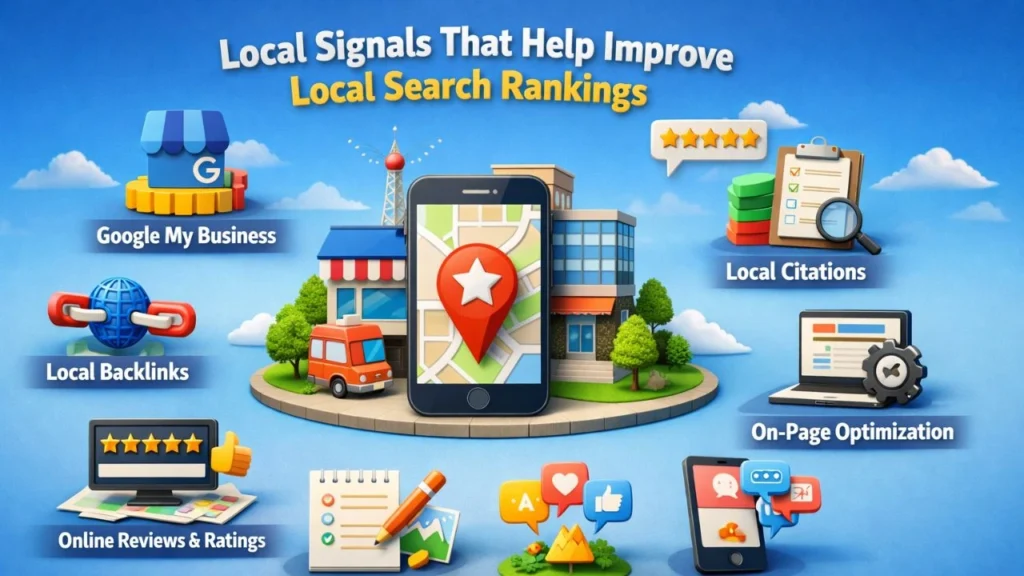
If you want to improve local search rankings, your off-site efforts should support Google’s core local ranking framework: relevance, distance, and prominence. Google Business Profile documentation says local results are mainly based on those factors, and prominence is influenced by signals such as how many websites link to your business and how many reviews you have. More positive reviews can help local ranking.
This makes local off page SEO highly practical. You should build citations on trustworthy business directories, earn local backlinks from chambers, local blogs, event pages, schools, trade groups, and neighborhood organizations, and maintain a review generation process that encourages steady, genuine customer feedback. Google also says replying to reviews shows you value customer feedback, and helpful replies can help your business stand out.
If your goal is to improve local search rankings, do not isolate local SEO from broader authority building. A strong local presence grows when your business information is complete, your mentions are consistent, your reviews are active, and other websites in your area recognize your brand as a real part of the community. That is where local visibility and broader off page SEO overlap beautifully.
Off Page SEO for AI Search, AEO, and Voice Search
The rise of AI answers has not replaced SEO fundamentals. It has raised the value of being the most reliable source. Google says there are no additional requirements to appear in AI Overviews or AI Mode beyond normal SEO best practices, technical eligibility, and helpful content. That means your off-page work should focus less on gaming a new system and more on becoming the source other systems want to reference.
This is where off page SEO supports GEO and AEO. When your site earns quality mentions and topic-relevant links, you strengthen the signals that your brand is known in that space. When your content is clearly structured, answer-focused, and technically accessible, it becomes easier for search systems to understand and surface. When other trusted sites discuss your insights, they reinforce your authority.
For voice search, the same principle applies. Create pages that answer spoken-style questions clearly. Then promote those pages where people already discuss those questions. The winning combination is simple: strong on page SEO, a reliable technical SEO guide approach, and off page SEO that makes your answers more visible and more trusted across the web.
Off Page SEO Mistakes to Avoid
The biggest mistake is chasing volume over relevance. A pile of irrelevant links will not create the kind of authority that lasts. Another mistake is forcing exact-match anchor text everywhere. Google’s documentation explicitly warns against keyword stuffing and advises natural anchor text. So while you absolutely want your target terms to appear in your content, you should not repeat them so aggressively that the writing becomes unnatural.
Another common mistake is running outreach to pages that are not ready to rank. If the content is weak, thin, or technically messy, your campaign wastes time. And finally, avoid manipulative shortcuts such as hidden links, spammy user-generated link drops, deceptive redirects, or schemes designed purely to influence rankings. Google’s spam policies are direct about these behaviors.
A Simple Off Page SEO Plan You Can Use
Start with one priority page. Make sure the page is genuinely strong. Improve the structure, intent match, trust signals, internal links, and clarity. Support it with relevant supporting content on your site. Then choose one promotion path: outreach, digital PR, local partnership building, or expert contribution campaigns.
Next, create a repeatable system. Track which pages earn links, which sites respond, which content formats attract mentions, and which efforts drive both rankings and qualified traffic. Review your brand mentions, referral traffic, local review growth, and keyword movement monthly. The point of off page SEO is not activity for its own sake. It is measurable authority growth.
Conclusion
The off page SEO strategies that work in 2026 are the ones built on trust, relevance, and usefulness. Yes, Link Building still matters. Yes, authority still matters. But the winners are not the sites chasing shortcuts. They are the sites combining on page SEO, a reliable technical SEO guide, and a disciplined link building strategy with real brand-building work.
If you want first-page rankings, think bigger than backlinks. Build pages worth citing. Earn mentions from places that matter. Strengthen your reputation in your niche and your location. Do that consistently, and your off page SEO will not just help you rank. It will help you stay visible as search keeps evolving.
FAQs
What is off page SEO?
Off page SEO refers to all the authority and trust signals that happen outside your website, such as backlinks, brand mentions, reviews, local citation and digital PR. Google still uses links to discover pages and as a relevance signal, but it also evaluates many other factors beyond links alone.
Is Link Building still important in 2026?
Yes. Link Building still matters because links help Google discover content and understand relevance. What changed is the quality bar. Relevance, editorial value, and natural anchor usage matter far more than link quantity.
How does off page SEO support on page SEO?
Off page SEO amplifies good on page SEO. When a well-optimized page earns strong external signals, it has a better chance to compete. If the page is weak, off-page efforts usually deliver less value. Google’s guidance on helpful content and technical accessibility supports this approach.
Can off page SEO improve local search rankings?
Yes. Google says local rankings are mainly based on relevance, distance, and prominence, and prominence includes signals like website links and reviews. That is why local backlinks, citations, and review growth can help improve local search rankings.
Does off page SEO help with AI Overviews and answer engines?
Yes, but not through a separate trick. Google says there are no extra special optimizations required for AI Overviews or AI Mode beyond solid SEO fundamentals, technical eligibility, and helpful content. Strong authority signals from the web can still support visibility because they reinforce trust and relevance.
