







Starting a new business is exciting, but let’s be honest — marketing can feel overwhelming when your budget is tight. You want visibility, leads, and sales, yet you cannot afford to burn cash experimenting with every trend. That’s where low cost marketing strategies for startups become extremely important.
But are they really effective? Or do they slow down growth compared to aggressive paid campaigns?
In this detailed guide, you’ll learn how to evaluate, plan, and implement budget-friendly marketing methods that actually work. We’ll explore the best online marketing strategies, practical planning frameworks, and growth-focused approaches you can apply immediately.
Table of Contents
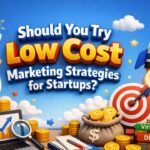
What Are Low Cost Marketing Strategies for Startups?
Low cost marketing strategies for startups focus on maximizing results while minimizing financial investment. Instead of relying heavily on paid advertising, you prioritize:
- Organic visibility
- Smart content distribution
- Community building
- Conversion optimization
- Strategic automation
For early-stage founders, these methods reduce risk. You’re not gambling capital. you are building assets — search visibility, brand awareness, audience trust, and authority.
Many of the best online marketing strategies for small brands actually begin this way. They start lean, test messaging, understand customers deeply, and scale only after proving traction.
When implemented correctly, low cost marketing strategies for startups don’t limit growth — they build a sustainable foundation.
What Are the Most Effective Marketing Strategies for Early-Stage Businesses?
Before choosing tactics, you need clarity. Founders often ask, what are the most effective marketing strategies? The real answer depends on your stage, audience, and goals.
However, successful startups usually focus on:
- Clear audience definition
- Strong value positioning
- Search-driven traffic
- Relationship-based engagement
- Continuous testing and optimization
Instead of chasing every channel, you should choose two or three that align with your customer journey.
For example:
- If customers search before buying, prioritize SEO and content.
- If buying decisions depend on trust, focus on authority building.
- If your product solves an urgent problem, targeted paid ads may work.
The key is alignment. Without it, even the best marketing strategy plan will fail.
Best Marketing Strategies for Startups 2026: What’s Changing?
Looking ahead, best marketing strategies for startups 2026 will rely heavily on:
- AI-powered personalization
- Data-driven decision-making
- Community-based marketing
- Automation-led workflows
- Privacy-conscious targeting
Founders are now leveraging tools that simplify campaign management and analytics. Instead of hiring large teams, you can use automation software to handle repetitive tasks while you focus on strategy.
AI-driven search tools and platforms like ChatGPT Search are also changing how users discover information. This means startups must focus more on structured content, clear answers, and authority signals.
Interestingly, many of these emerging tactics still fall under low cost marketing strategies for startups because the barrier to entry is lower than ever.
How to Create a Marketing Strategy Plan That Fits a Startup Budget?
If you’re wondering how to create a marketing strategy plan, here’s a simple step-by-step process:
1. Define Clear Objectives
Are you aiming for traffic, leads, signups, or direct sales? Be specific.
2. Identify Your Ideal Customer
Understand their pain points, behavior patterns, and buying triggers.
3. Choose the Right Channels
Focus on platforms where your audience is active. For many startups, this includes SEO, Email Marketing, and social platforms.
4. Set a Lean Budget Allocation
Divide your budget between:
- Content production
- Technical optimization
- Minimal paid testing (if needed)
5. Track Key Metrics
Monitor conversions, click-through rates, and engagement. Run an A/B Test regularly to refine performance.
When executed strategy, low cost marketing strategies for startups allow you to experiment without draining your runway.
Marketing Strategy Plan Template for 2026
A well-structured marketing strategy plan template for 2026 should include:
- Executive Summary
- Market & Competitor Analysis
- Target Audience Profile
- Core Messaging
- Channel Strategy
- Budget Breakdown
- Performance Metrics
- Optimization Plan
Within your channel strategy, you can integrate:
- Content Marketing for long-term authority
- Link Building in SEO to improve domain credibility
- Efforts to Optimize Website Content for SEO
- Tactics to improve Local Search Rankings if you serve specific areas
- Pay Per Click Marketing for growth once messaging is validated
This structured approach ensures you’re not randomly experimenting but executing with purpose.
Digital Marketing Strategy Examples for Small Business
Looking at digital marketing strategy examples for small business, you’ll notice patterns:
1. Content-Led Authority Model
Businesses create educational blogs, guides, and tutorials to drive organic traffic.
2. SEO-First Growth
They prioritize keyword research, internal linking, and technical optimization.
3. Community Engagement
Social proof, audience interaction, and relationship building.
4. Referral & Partnership Growth
Collaborations amplify reach without high ad spend.
Many of these approaches fall under low cost marketing strategies for startups because they emphasize consistency over capital.
Effective Marketing Strategy for Ecommerce Growth
If you run an online store, an effective marketing strategy for ecommerce growth should focus on:
- Conversion rate optimization
- Product page SEO
- Retargeting visitors
- Cart abandonment recovery
- Review-based trust building
You can also explore marketing strategies for ecommerce businesses that combine SEO with social engagement and personalized email campaigns.
Startups in ecommerce should:
- Optimize product descriptions
- Encourage user-generated content
- Improve loading speed
- Structure categories for better search crawling
These foundational actions cost less but deliver consistent results.
Marketing Strategies for Ecommerce Businesses on a Tight Budget
When budgets are limited, marketing strategies for ecommerce businesses should prioritize:
- Organic traffic generation
- Email segmentation
- Customer retention campaigns
- Social media engagement
Sharing practical Social Media Marketing Strategy Tips regularly builds awareness without heavy ad spend.
If you operate a mobile app alongside your store, consider ASO for Mobile App optimization to improve discoverability.
All of these techniques align perfectly with low cost marketing strategies for startups focused on long-term scalability.
Best Online Marketing Strategies for Small Brands That Scale
Scaling doesn’t always require massive spending. Some of the best online marketing strategies for small brands include:
- Topic cluster-based content
- Authority-building guest posts
- Structured email funnels
- Conversion-focused landing pages
- Data-backed improvements
When combined properly, these become some of the best online marketing strategies for sustainable growth.
Instead of rushing into high-cost campaigns, you validate demand organically first. Then, once conversion rates are strong, scaling becomes safer.
Marketing Strategy Tips for Beginners
If you’re just starting, here are essential marketing strategy tips for beginners:
- Start simple.
- Focus on one channel first.
- Track everything.
- Improve conversion before increasing traffic.
- Stay consistent for at least 90 days.
Beginners often underestimate patience. Many low cost marketing strategies for startups require time but reward you with compounding results.
Pros and Cons of Low Cost Marketing Strategies for Startups
Advantages
- Lower financial risk
- Sustainable growth
- Strong brand authority
- Data-driven refinement
Disadvantages
- Slower initial traction
- Requires effort and consistency
- Skill-based execution
Still, for most founders, low cost marketing strategies for startups provide the safest path to predictable growth.
Common Mistakes Startups Make
Avoid these errors:
- Targeting everyone instead of a niche
- Ignoring SEO fundamentals
- Publishing inconsistent content
- Over-relying on paid ads too early
- Failing to test and optimize
Without continuous improvement, even the strongest strategy weakens.
Should You Combine Low Budget and Paid Marketing?
Yes — but carefully.
Start with organic channels to validate:
- Messaging
- Target audience
- Conversion funnel
Once metrics look promising, introduce small paid campaigns.
Pay Per Click Marketing for growth can accelerate results when combined with strong organic foundations. However, using it too early may drain your budget without clear ROI.
Final Verdict
If you are building a startup with limited capital, trying low cost marketing strategies for startups is not just an option — it’s a smart starting point.
In the early stages, your biggest goal is not rapid scaling. It’s validation. You need to understand your audience, refine your messaging, and test your offer before investing heavily in paid campaigns. Budget-friendly strategies allow you to do exactly that. They help you generate traffic, build trust, and improve conversions without putting financial pressure on your business.
However, you should approach them with the right mindset. Low-cost does not mean low-effort. These strategies demand consistency, patience, and continuous improvement. You’ll need to focus on search visibility, meaningful engagement, structured content, and regular optimization. When done properly, they create long-term digital assets that continue to deliver results even when you are not actively spending money.
At the same time, relying only on organic methods forever may limit your growth speed. Once your funnels convert well and your positioning is clear, combining organic foundations with selective paid promotion can accelerate your expansion safely.
So, should you try them?
Yes — especially if you want sustainable, lower-risk growth. Start lean. Learn what works. Strengthen your systems. Then scale confidently.
That balanced approach gives your startup the best chance to grow steadily, compete effectively, and build authority without unnecessary financial strain.
Frequently Asked Questions (FAQ)
1. What are low cost marketing strategies for startups?
Low cost marketing strategies for startups are budget-friendly methods that focus on organic growth, audience engagement, and smart optimization rather than heavy advertising spend. These strategies typically include SEO, content creation, email campaigns, social engagement, and conversion improvements. The goal is to build long-term assets that generate consistent traffic and leads without high upfront investment.
2. Are low cost marketing strategies for startups effective?
Yes, they can be highly effective when executed consistently. While results may take longer compared to aggressive paid campaigns, they often produce sustainable growth. When you focus on value-driven content, optimized web pages, and clear targeting, low cost marketing strategies for startups can deliver strong ROI over time.
3. What are the most effective marketing strategies for early-stage startups?
The most effective marketing strategies depend on your audience and business model. However, startups typically benefit from:
Search engine optimization
Content-driven authority building
Email nurturing campaigns
Community engagement
Conversion optimization
Instead of spreading resources thin, it’s better to focus on a few channels and execute them well.
4. How to create a marketing strategy plan for a startup?
To create a marketing strategy plan, you should:
Define clear business objectives.
Identify your ideal customer profile.
Select the right marketing channels.
Allocate your limited budget wisely.
Track performance and optimize regularly.
Following a structured marketing strategy plan template for 2026 can help you stay organized and aligned with measurable goals.
5. What are the best online marketing strategies for small brands?
Some of the best online marketing strategies for small brands include:
SEO-focused content creation
Building topical authority
Email list growth
Strategic partnerships
Conversion rate optimization
These approaches help smaller brands compete effectively without requiring massive advertising budgets.
6. How can ecommerce startups grow with a limited marketing budget?
Ecommerce startups can focus on:
Optimizing product pages for search
Improving user experience and page speed
Encouraging customer reviews
Building email retention sequences
Running small-scale, data-driven paid tests
An effective marketing strategy for ecommerce growth often begins with strong organic visibility and optimized conversion funnels before scaling paid efforts.
7. Should startups rely only on low-budget marketing methods?
Not necessarily. While low cost marketing strategies for startups are ideal in the early stages, combining them with selective paid campaigns can accelerate growth once your messaging and funnel are validated. A balanced approach often delivers the best long-term results.
8. How long does it take to see results from low cost marketing strategies?
Results vary depending on your niche, competition, and consistency. SEO and content strategies may take several months to show strong traction, while email and engagement-based campaigns can deliver quicker wins. The key is consistency, measurement, and continuous improvement.
9. What mistakes should startups avoid in budget marketing?
Common mistakes include:
Targeting too broad an audience
Ignoring analytics and performance tracking
Publishing inconsistent content
Over-investing in paid ads without validation
Failing to optimize conversion funnels
Avoiding these errors improves the effectiveness of low cost marketing strategies for startups.
10. Can beginners implement these strategies without prior experience?
Yes. With proper research, structured planning, and consistent effort, beginners can successfully implement budget-friendly marketing strategies. Start simple, focus on learning, test small changes, and improve gradually. Over time, your skills and results will compound.
