









If you are new to SEO, one skill will shape almost everything you do next: Keyword Research. Before you write a blog post, build a service page, or create a content plan, you need to know what people are searching for, why they are searching for it, and what kind of answer they expect.
That is where Keyword Research becomes essential.
Many beginners think SEO starts with writing. It does not. It starts with understanding search behavior. When you learn the basics of Keyword Research, you stop guessing and start creating content with a purpose. You know which topics deserve attention, which phrases match user intent, and which pages have a better chance to rank.
This beginner-friendly SEO Guide will walk you through the core ideas in a simple way. By the end, you will understand what Keyword Research means, why it matters, how to do it step by step, and how to use it to build content that search engines and readers can trust.
Table of Contents
What Is Keyword Research?
Keyword Research is the process of finding the words and phrases people type into search engines when they want information, solutions, products, or services.
In simple terms, Keyword Research helps you understand your audience’s language. Instead of writing based only on what you think matters, you build content around what people are already searching for.
That is why Keyword Research is a core part of every beginner SEO Guide. It connects your content to real search demand. It also helps you align your page with user intent, which is critical for stronger visibility in Google.
Why Keyword Research Matters for Beginners?
If you skip Keyword Research, you may end up publishing content that looks good on your site but gets very little search traffic. That is one of the most common mistakes beginners make.
When you do Keyword Research properly, you gain several advantages.
First, you understand what your audience wants. You can see the exact phrases they use, the questions they ask, and the problems they need solved.
Second, you can create better page topics. Instead of writing random articles, you start building content around real demand.
Third, you improve content relevance. Search engines try to show results that best match the query. When your page is clearly aligned with that query, your chances improve.
Fourth, you make your site easier to scale. Good Keyword Research helps you plan categories, blog posts, supporting content, and internal links with more clarity.
Google’s starter documentation also highlights that SEO is about helping search engines crawl, index, and understand your content, and that using the words your audience actually searches for in important places can help them connect your page to relevant queries.
Keyword Research Basics You Need to Know
Before you start collecting keywords, you need to understand a few basic terms.
Short tail keywords
These are broad search terms, usually one to three words long. They often have high search volume, but they are also more competitive and less specific.
Example: “keyword research”
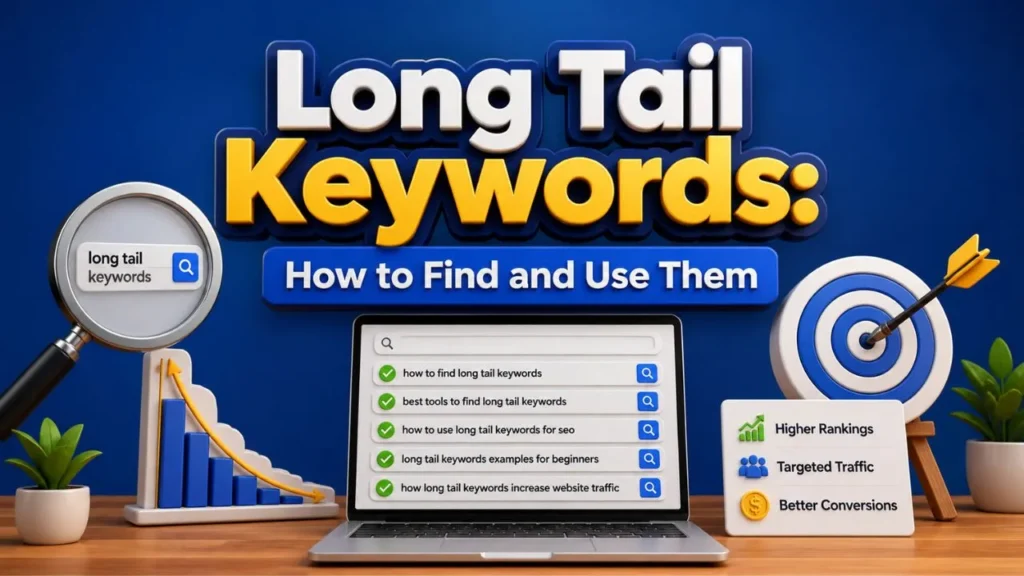
Long tail keywords
These are longer, more specific phrases. They usually have lower search volume, but they are often easier to rank for and can bring more targeted traffic.
Example: “keyword research basics for beginners”
For a beginner, long tail queries are often more practical because they are clearer and closer to what a searcher actually needs. For a practical process, learn how to find and use long-tail keywords based on search intent, competition, and relevance.
Informational keywords
These keywords are used when someone wants to learn something.
Examples:
- what is keyword research
- how to do keyword research
- keyword research tips for beginners
Commercial keywords
These keywords show that the searcher is comparing tools, services, or options before making a decision.
Example:
- best keyword research tools for beginners
Transactional keywords
These keywords show a stronger buying intent.
Example:
- buy keyword research tool
Navigational keywords
These are used when someone wants to reach a specific site or brand.
Example:
- Google Search Console login
Understanding these types makes Keyword Research more strategic. It helps you decide which pages should be blog posts, which should be service pages, and which should be landing pages.
How Search Intent Shapes Keyword Research?

Search intent is the reason behind the query. This is where many beginner SEO efforts fail. They find a keyword, but they do not study what kind of content Google is already rewarding for it.
If someone searches for “what is keyword research,” they usually want a definition, examples, and a basic explanation. If you show them a hard sales page, the content will not match the intent.
If someone searches for “best keyword research tool,” they are probably comparing products or features. A simple beginner tutorial may not satisfy that query fully.
This is why Keyword Research is not just about collecting phrases. It is about matching those phrases to the right content format.
A strong beginner SEO Guide should teach you to look at the search results before you create content. Check whether the top pages are guides, list posts, service pages, tutorials, or videos. The search results often reveal the intent better than any keyword metric alone.
How to Do Keyword Research Step by Step?
Now let us go through the basic process.
1. Start with one core topic
Choose a topic closely connected to your website, audience, or business focus. Keep it broad enough to expand, but focused enough to stay useful.
For this article, the core topic is Keyword Research.
2. Create a list of seed keywords
Seed keywords are the starting terms related to your main topic. These are the basic words that describe the subject. You are not trying to build a final list yet. You are just creating a base.
3. Expand the list with variations
Now take your seed terms and look for more detailed keyword variations. This is where you gather long tail phrases, common questions, and related ideas.
You can use:
- Google autocomplete
- People Also Ask
- related searches
- Google Search Console
- beginner-friendly keyword tools
4. Study the search intent
For every promising keyword, ask one question: what is the user expecting to find?
If the query is educational, your page should teach.
If the query is commercial, your page should compare.
If the query is transactional, your page should help the user act.
5. Group similar keywords together
Many beginners try to create one page for every keyword. That leads to thin content and keyword overlap.
A better approach is to group related terms that share the same intent and answer them on one strong page.
For example, these could fit naturally into one article:
- keyword research basics
- beginner keyword research
- what is keyword research
- how to do keyword research
6. Choose one primary keyword
Pick the main phrase you want the page to focus on. It should be relevant, realistic, and clearly connected to the content.
In this article, the primary keyword is Keyword Research.
7. Add secondary and supporting keywords
Your page should not repeat the main phrase unnaturally. Instead, use related terms that support the topic.
Examples:
- SEO Guide
- keyword intent
- long tail keywords
- search volume
- keyword difficulty
- content planning
This makes the article broader, more natural, and more useful.
8. Map the keyword to the right page
Once you finish Keyword Research, assign the keyword to a specific page type. Do not target the same primary phrase across multiple pages unless the intent is clearly different.
This step helps reduce confusion for both users and search engines.
Best Places to Find Keyword Ideas as a Beginner

One reason Keyword Research feels difficult at first is that beginners think they need expensive software. That is not always true.
You can find strong keyword ideas using simple sources.
Google autocomplete
Start typing a query into Google and note the suggestions. These are often based on common search behavior.
People Also Ask
This section can reveal related questions and subtopics. It is especially useful for FAQ ideas, voice search coverage, and answer-focused headings.
Related searches
The searches at the bottom of the results page often show supporting keyword themes that can strengthen your content.
Google Search Console
If your site already has some traffic, Search Console can show the queries you are getting impressions for. This can guide your next content updates.
Competitor pages
Look at top-ranking content in your niche. Study their headings, subtopics, and content structure. Do not copy them. Learn from the angles they cover and the questions they answer.
How to Choose the Right Keyword?
Not every keyword is worth targeting.
Good Keyword Research involves judgment. You want a keyword that fits your content, matches search intent, and gives you a realistic chance to compete.
Relevance
The keyword must closely match what your page actually covers. Relevance matters more than vanity volume.
Search intent
If your page format does not match intent, the keyword is a weak target no matter how attractive the numbers look.
Competition
Some keywords are too broad for a new or growing site. Beginners often get better results by focusing on lower-competition long tail topics first.
Search volume
Volume matters, but it should not dominate your choices. A lower-volume keyword with strong relevance can outperform a higher-volume keyword with weak alignment.
Business value
If you run a business site, think about whether the keyword can attract the right audience, not just any audience.
Common Keyword Research Mistakes Beginners Should Avoid
A lot of weak SEO content fails because of avoidable errors.
Targeting only broad keywords
Broad terms are tempting, but they are often harder to rank for and less clear in intent.
Ignoring intent
This is one of the biggest mistakes in Keyword Research. If you mismatch the keyword and the page type, rankings become harder to win.
Keyword stuffing
Using Keyword Research as a phrase too many times will not help. It can make the article feel forced. Use the primary keyword naturally and support it with related language.
Creating one page for every small variation
This can lead to thin pages and internal competition. Group related terms when they belong together.
Skipping SERP analysis
Before you finalize a keyword, study the current search results. The SERP tells you what kind of content is already working.
Forgetting supporting questions
People do not search with one exact phrase only. They also ask follow-up questions. Strong Keyword Research includes those questions within the page.
How to Use Keyword Research in Content?
Once you complete Keyword Research, the next step is content placement.
Use your primary keyword in:
- the title
- the H1
- the introduction
- at least one or two relevant H2s
- the conclusion
- image alt text where appropriate
Use related keywords naturally in body copy, FAQs, and supporting headings.
Do not force exact-match repetition into every paragraph. Instead, make the page comprehensive and readable.
Google’s guidance continues to emphasize clear page organization, descriptive titles and headings, and crawlable internal links. It also notes that structured data can help search engines understand the page better when it accurately reflects visible content.
A Simple Beginner Workflow You Can Follow
If you want an easy routine, follow this process every time:
- Choose a topic.
- List seed terms.
- Expand them into related phrases.
- Study search intent.
- Group similar terms.
- Pick one primary keyword.
- Add supporting keywords.
- Write the page around the topic, not around repetition.
- Review performance later and update the content.
Conclusion
If you are just starting out, do not overcomplicate SEO.
Begin with the basics. Learn how people search. Understand what they want. Build pages that answer those needs clearly and honestly. That is what Keyword Research is really about.
A solid SEO Guide does not begin with tricks. It begins with relevance, intent, structure, and usefulness.
When you treat Keyword Research as the foundation of your content strategy, you make every page smarter. You stop writing in the dark. You start creating content with direction.
And that is exactly where better rankings begin.
Frequently Asked Questions
What is Keyword Research in SEO?
Keyword Research in SEO is the process of finding the words and phrases people use in search engines, then using those terms to plan content that matches user intent.
Why is Keyword Research important for beginners?
It helps beginners avoid guessing. Keyword Research shows what topics people actually search for, what type of content they expect, and how to structure pages more effectively.
How do beginners find keywords for free?
Beginners can start with Google autocomplete, People Also Ask, related searches, and Google Search Console. These are practical sources for early Keyword Research.
What is the difference between short tail and long tail keywords?
Short tail keywords are broad and often more competitive. Long tail keywords are more specific and usually easier to target because they reveal clearer intent.
How many keywords should one page target?
A page should usually have one clear primary keyword and several closely related supporting keywords. Good Keyword Research focuses on topic relevance, not random keyword collection.
Is Keyword Research still important in AI search?
Yes. Google says the same SEO fundamentals remain relevant for AI features in Search, which means Keyword Research, intent matching, helpful content, and clear page structure still matter.