









If you want better rankings, better traffic, and better content targeting, you need to understand how long tail keywords work. Many site owners spend too much time chasing broad search terms that are highly competitive and often too vague to convert well. That approach usually leads to frustration, especially when your pages fail to rank or bring in the right visitors.
This is where long tail keywords make a real difference.
Instead of targeting broad phrases that attract mixed intent, question based keywords help you reach people who already know what they want. They search with more specific language, clearer intent, and stronger interest. When you align your content with those searches, you give your website a better chance to rank and a better chance to attract the kind of visitors who actually engage.
In modern Keyword Research, this is one of the smartest ways to build content that performs. You are not simply trying to get traffic. You are trying to get the right traffic. That is why question based keywords matter so much for blog posts, service pages, FAQs, and voice search optimization.
In this guide, we will break down what long tail keywords are, how to find them, how to choose the right ones, and how to use them naturally in your content without stuffing or sounding repetitive.
Table of Contents
What Are Long Tail Keywords?
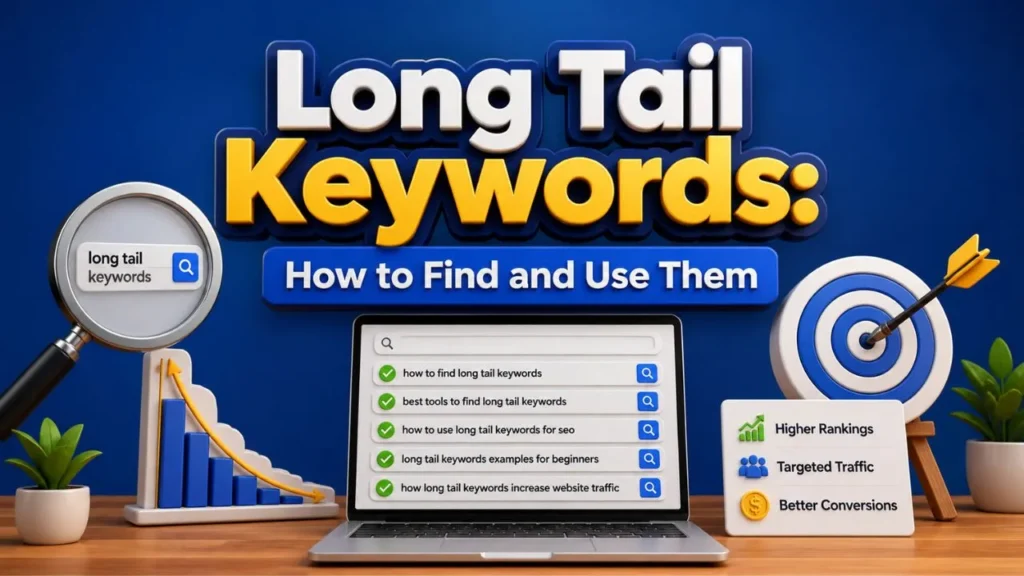
question based keywords are more specific search phrases that usually contain three or more words. They are called long tail because they sit in the longer, more detailed part of the search demand curve. These queries may have lower search volume than broad keywords, but they often bring in more focused visitors.
For example:
- “shoes” is broad
- “running shoes” is more specific
- “best running shoes for flat feet” is a long tail keyword
That last phrase gives you much more information about what the searcher wants. It shows intent, context, and purpose.
This is why long tail keywords are so valuable. They help you match your content to real user needs. In Keyword Research, that makes them useful for targeting clearer search intent and building pages that feel more relevant to users and search engines alike.
Why Long Tail Keywords Matter for SEO?
Many people assume that bigger keywords always mean better results. In reality, broader keywords are often harder to rank for and less likely to convert. Long tail keywords offer a more practical path.
They match user intent better
When someone searches with a detailed phrase, they are usually further along in their journey. They know what they are looking for. That makes question based keywords powerful because your content can answer a very specific need.
They are often easier to rank for
Broad keywords usually have stronger competition. Large websites, established brands, and high authority pages dominate them. semantic SEO keywords often have more realistic ranking opportunities, especially for newer or growing websites.
They attract more qualified traffic
Not all traffic is equal. A page that ranks for long tail keywords can attract visitors who are more likely to stay, read, click, and convert. That is a major benefit when you want content that supports business goals, not just vanity metrics.
They strengthen topical relevance
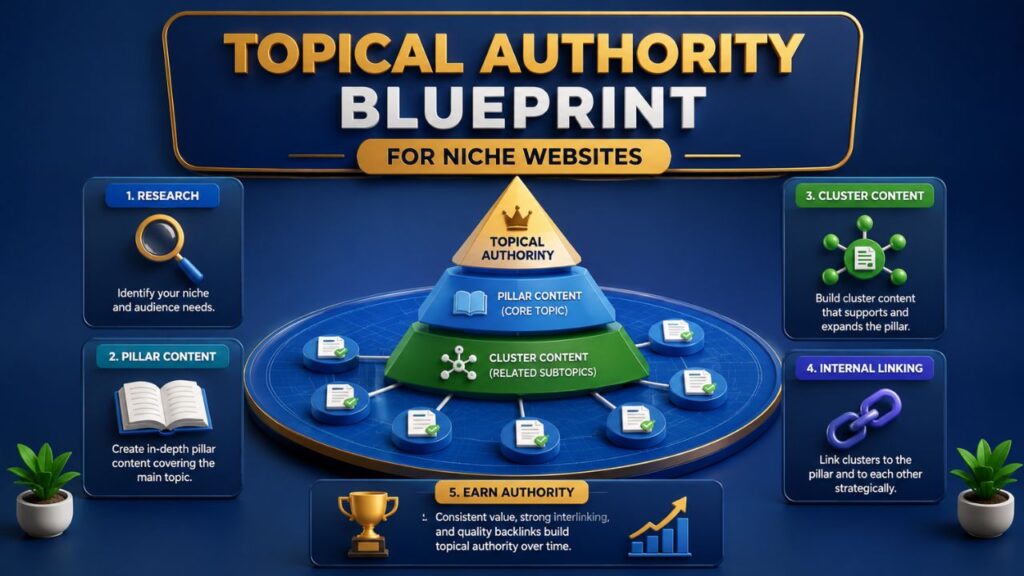
In Keyword Research, using long tail keywords across related articles helps build content depth. This supports topical authority and gives search engines a clearer understanding of your website’s subject focus.
Understanding Search Intent Behind Long Tail Keywords
You cannot use semantic SEO keywords properly unless you understand why people search the way they do. Search intent should always guide your content choices.
Here are the main types of intent:
Informational intent
The user wants to learn something.
Examples:
- how to find long tail keywords
- what are long tail keywords in SEO
- why long tail keywords matter
Commercial intent
The user is comparing options before making a decision.
Examples:
- best tools for long tail keywords
- long tail keywords for ecommerce SEO
- top Keyword Research methods for beginners
Transactional intent
The user is ready to take action.
Examples:
- buy keyword research tool
- hire SEO expert for keyword research
- keyword research services for small business
Navigational intent
The user wants a specific site, brand, or page.
Examples:
- google keyword planner long tail keywords
- ahrefs keyword research guide
When you choose semantic SEO keywords, make sure the intent fits the page. A blog post should usually target informational or light commercial intent. A service page should lean toward commercial or transactional intent.
How to Find Semantic SEO Keywords?
Finding semantic SEO keywords is not as complicated as many people think. The real goal is to understand your audience, observe the language they use, and organize ideas based on intent.
1. Start with a core topic
Begin with a broad topic related to your niche. If your site focuses on SEO, your core topic might be:
- Keyword Research
- technical SEO
- local SEO
- link building
From there, you can expand into more specific phrases.
2. Use Google Autocomplete
Type a broad keyword into Google and study the suggestions. These suggestions often reveal real semantic SEO keywords based on actual search behavior.
For example, if you type “Keyword Research,” Google may suggest:
- Keyword Research for beginners
- Keyword Research for blog posts
- Keyword Research step by step
- Keyword Research for SEO content
These are useful starting points because they reflect language people already use.
3. Check People Also Ask
Google’s People Also Ask section is a strong source of semantic SEO keywords and question-based queries. It helps you discover the problems, comparisons, and follow-up questions users care about.
This is especially useful for:
- FAQ sections
- answer-focused content
- voice search optimization
- AEO-friendly formatting
4. Review related searches
At the bottom of search results, Google often shows related searches. These can reveal semantically connected semantic SEO keywords that support content depth and keyword clustering.
5. Explore forums and communities
Reddit, Quora, niche forums, and online communities can show you how real people phrase their questions. This matters because long tail keywords often come directly from natural language, not polished SEO terms.
If you want content that feels useful, listen to how people actually talk.
6. Use keyword tools
Keyword tools can help you expand lists, compare volume, and spot variations. They are useful when you want to validate ideas found through manual research.
Good tools can help you discover:
- question keywords
- low competition phrases
- related topics
- search intent patterns
- content gaps
In Keyword Research, tools help with scale, but they should not replace judgment. You still need to decide which semantic SEO keywords truly fit your audience and page purpose.
7. Look at competitor content
Review articles that already rank for your topic. Look at their headings, subtopics, and FAQ sections. This can reveal semantic SEO keywords they cover well and areas they missed.
Do not copy them. Learn from them, then build something more complete and more useful.
How to Choose the Best Long Tail Keywords?
Not every keyword is worth targeting. You need a simple filtering process so your content stays focused.
Relevance comes first
The best semantic SEO keywords are closely tied to your audience, service, product, or niche. Even if a keyword has decent volume, it is not useful if it does not match what your page offers.
Intent must match the page
A blog post about education should not target a keyword meant for a product page. Strong Keyword Research always connects intent with the right content format.
Difficulty should be realistic
Some buyer intent keywords are still competitive. If your site is still growing, choose phrases where you have a fair chance to compete.
Business value matters
Ask yourself a simple question: if this page ranks, will it bring the kind of visitor I want?
That is how you keep buyer intent keywords tied to practical outcomes, not random traffic.
One page, one clear focus
A good page can rank for multiple related terms, but it still needs one clear primary direction. Choose a main keyword, then support it with close variations and semantically related phrases.
How to Use Long Tail Keywords in Content?
Once you have selected the right buyer intent keywords, the next step is using them naturally. This is where many people make mistakes. They either underuse them or force them into every paragraph.
The goal is balance.
Put the main keyword in the title
Your main keyword should appear in the title if it fits naturally. This helps search engines and users understand the page topic quickly.
Use it in the introduction
Adding buyer intent keywords early in the article helps establish relevance. It also confirms to readers that they landed on the right page.
Include it in headings where appropriate
Headings improve structure, readability, and crawlability. When relevant, use buyer intent keywords or close variations in H2 and H3 sections.
Add supporting variations in the body
Do not repeat the exact same phrase too often. Mix in natural variations, related phrases, and user-focused wording. That keeps the content readable while reinforcing topic relevance.
Use them in FAQs
FAQ sections are excellent for long tail keywords because they align with how people search, especially in voice search. Question-based formatting also improves answer clarity.
Apply them in metadata and alt text
Use relevant long tail keywords in the meta title, meta description, image alt text, and internal anchor text when appropriate. Keep everything natural and useful.
Where to Place Long Tail Keywords for Stronger SEO?
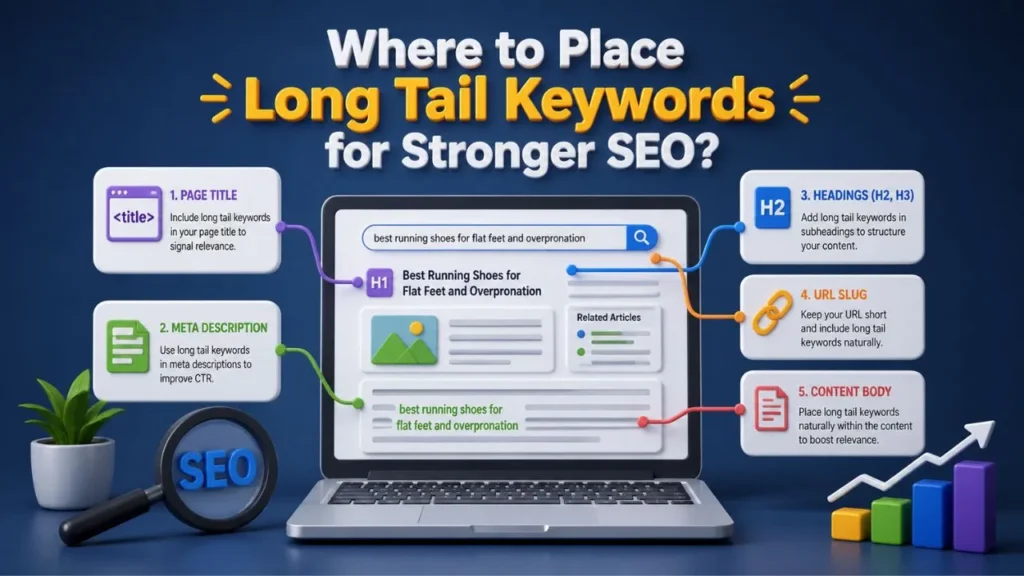
Here are the best places to use long tail keywords on a page:
- Title tag
- Meta description
- URL slug
- H1 heading
- H2 and H3 headings
- Introduction paragraph
- Main body content
- FAQ section
- Image alt text
- Internal links
You do not need to force the keyword into all of them every time. Use common sense. The page should still read smoothly.
Common Mistakes to Avoid
Even strong content can underperform if keyword use is weak. Here are mistakes you should avoid.
Targeting keywords without intent fit
Do not choose long tail keywords just because they look easy. If the intent does not match your page, the content will feel off.
Creating too many similar pages
Some site owners create separate pages for tiny keyword variations. This can lead to overlap, weak differentiation, and internal competition. Group similar long tail keywords into one strong page where possible.
Stuffing the exact phrase
Repeating long tail keywords unnaturally makes content harder to read. Search engines are better at understanding meaning now. Focus on relevance, not forced repetition.
Ignoring internal linking
Your page should connect to related articles, guides, or service pages. This helps search engines understand your site structure and improves user navigation.
Writing shallow content
Specific keywords deserve specific answers. If your content lacks depth, it may not satisfy the search. Good Keyword Research should always lead to useful content, not thin pages.
A Simple Workflow You Can Follow
If you want a practical system, use this:
Step 1
Choose a broad topic connected to your niche.
Step 2
Expand it into long tail keywords using Google suggestions, forums, tools, and competitor research.
Step 3
Group similar keywords by intent.
Step 4
Select one primary keyword for each page.
Step 5
Create content that fully answers the query.
Step 6
Use long tail keywords naturally in key on-page elements.
Step 7
Track performance and update the content over time.
This workflow keeps your Keyword Research focused, strategic, and easier to scale.
Final Thoughts
If you want better SEO results, do not overlook the power of long tail keywords. They help you create content that matches what people are actually searching for. They support stronger intent alignment, better relevance, and more practical ranking opportunities.
In many cases, broad keywords look attractive but deliver weak results. Long tail keywords give you a smarter path. They help you meet users where they are, answer specific needs, and build content with a clearer purpose.
When you combine solid Keyword Research with natural writing, structured formatting, and user-focused answers, your content becomes more useful and more competitive. That is what search engines want to reward, and it is what readers want to find.
If you keep your focus on relevance, intent, and clarity, long tail keywords can become one of the strongest parts of your SEO strategy.
FAQs
What are long tail keywords in SEO?
Long tail keywords are specific search phrases, usually longer than broad keywords, that target clearer user intent and often have lower competition.
Why are long tail keywords important?
Long tail keywords are important because they help attract more targeted traffic, improve content relevance, and support better ranking opportunities.
How do I find long tail keywords?
You can find long tail keywords through Google Autocomplete, People Also Ask, related searches, forums, keyword tools, and competitor analysis.
Are long tail keywords easier to rank for?
In many cases, yes. Long tail keywords often face less competition than broad keywords, especially when they are highly specific and intent-driven.
How do long tail keywords help Keyword Research?
In Keyword Research, long tail keywords help you uncover specific user needs, group content by intent, and build pages around more realistic search opportunities.
Can I use multiple long tail keywords in one article?
Yes, but they should be closely related. One page can rank for several long tail keywords if the topic, intent, and content structure align naturally.
Do long tail keywords help voice search?
Yes. Voice searches are usually longer and more conversational, which makes long tail keywords especially useful for voice search optimization.
How many times should I use long tail keywords in a blog post?
Use long tail keywords naturally throughout the article. Focus on readability, intent, and relevance rather than forcing an exact number every few lines.